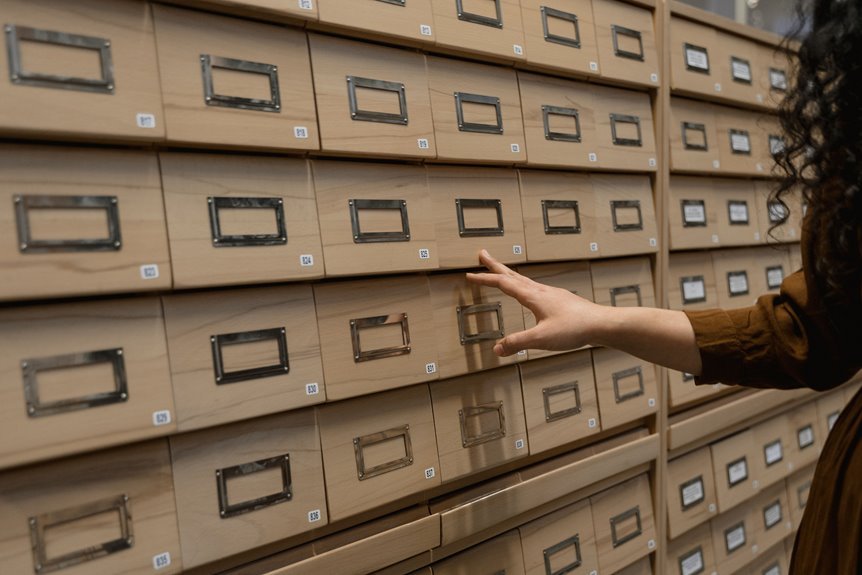

The Solarfusion Data Archive consolidates five datasets into a single, governed platform. It emphasizes robust metadata, provenance, and structured curation to support accessibility and reproducibility. Researchers can trace cross-dataset links and apply standardized workflows for visualization and integration. The archive aims for scalable access and rigorous quality control, offering actionable insights into solar fusion patterns. The framework invites scrutiny of governance and interoperability as users pursue cross-dataset analyses and methodological consistency.
What Is the Solarfusion Data Archive and Why It Matters
The Solarfusion Data Archive is a centralized repository that aggregates, preserves, and provides access to solar research data. It facilitates solar fusion studies by ensuring robust data provenance, enabling verification and replication.
Archival accessibility is enhanced through consistent metadata standards, structured curation, and reliable preservation practices. This framework supports researchers seeking freedom to explore, reuse, and challenge findings.
Exploring the Five Datasets: Content, Resolution, and Cross-Referenced Metadata
Five datasets comprise the Solarfusion Data Archive, each offering distinct content, resolution, and cross-referenced metadata to support solar research. The examination highlights content variety, resolution scales, and interconnected metadata, enabling cross referencing across datasets. Interpretation gaps are minimized through consistent metadata richness, while data governance structures ensure integrity. Researchers gain flexible access while maintaining clarity, precision, and purposeful alignment with open, freedom-friendly scholarly inquiry.
Access, Quality, and Reproducibility: How to Use SolarFusion for Robust Research
Access to SolarFusion is designed to be transparent and scalable, enabling researchers to select appropriate datasets and metadata cross-references for reproducible analyses.
The framework emphasizes data provenance, quality control, and robust archival governance, supporting access protocols and metadata standards.
Researchers benefit from cross referencing, visualization pipelines, and integration workflows to secure research reproducibility and overall data provenance in flexible, auditable environments.
Visualization and Integration: Turning Archives Into Actionable Solar Insights
By transforming raw archives into interoperable visualizations, SolarFusion enables researchers to quickly interpret patterns, compare temporal trends, and identify anomalies. Visualization and integration practices empower cross-cutting analysis, supporting open exploration while upholding integration governance. This approach enhances visualization efficiency, reduces duplication, and fosters interoperable workflows, allowing researchers to extract actionable insights without constraints, and to pursue freedom through transparent, rigorous data interpretation.
Frequently Asked Questions
How Often Are the Solarfusion Datasets Updated?
The updates cadence is semi-annual, with releases documented in data release notes. The archive follows a predictable schedule, allowing users to anticipate improvements while reviewing detailed changes in the notes for each iteration.
Are There Licensing Restrictions for Commercial Use?
Licensing terms govern commercial use: while some datasets allow broad use, others impose restrictions or require attribution. The archive provides explicit licenses; users must review each dataset’s terms to ensure compliant commercial activities.
What File Formats Are Used for Raw vs. Processed Data?
Raw data uses standardized binary formats; processed data employs domain-specific, portable containers. Data access is governed by access controls, while visualization methods leverage summarized outputs. This structure supports flexible analysis, collaboration, and freedom in interpretation.
How Is Data Provenance and Versioning Tracked?
Data provenance is tracked through data lineage and version control, providing traceable origins and changes. Symbolically, each file’s flight path reveals editors, timestamps, and transformations, ensuring reproducibility, auditability, and freedom to verify every dataset’s trustworthy trajectory.
Can I Cite Solarfusion Data in a Grant Without Access Fees?
Yes, one may cite SolarFusion data in a grant if citation rights and access terms are met; researchers should verify license specifics, ensure proper attribution, and comply with any fee or waiver conditions accompanying the citation rights.
Conclusion
The SolarFusion Data Archive stands as a gleaming beacon of order, where five datasets waltz under one governance umbrella, achieving reproducible research with the grace of a well‑trained metronome. Yet the rhythm is ironic: meticulous metadata and cross-referenced provenance promise transparency, while the archive’s complexity teases researchers with “easy access” while nudging them toward a behemoth workflow. In this satire, rigor meets brisk efficiency, and scientists pretend not to notice the delightful friction between simplicity and scale.